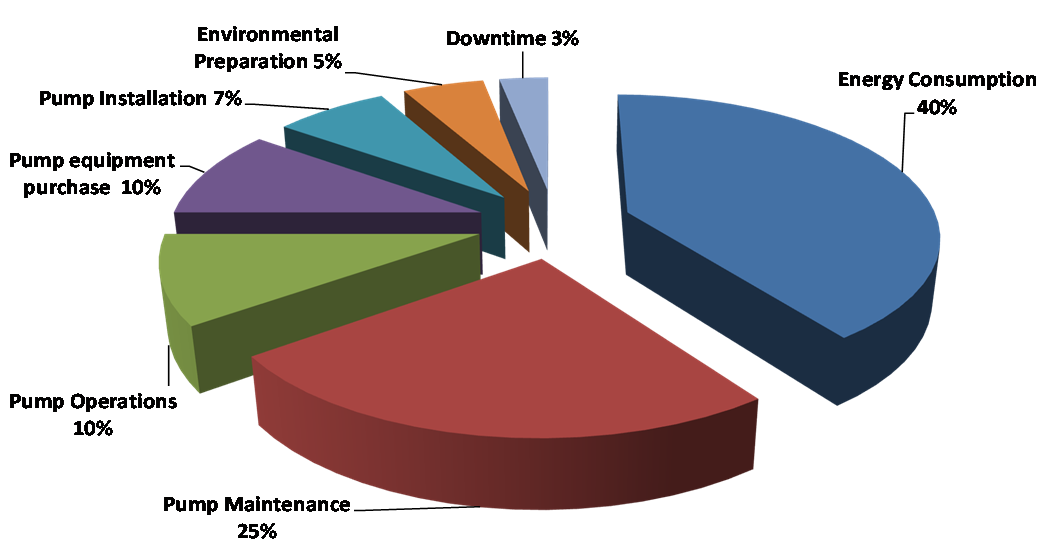
Насос ажилладаг газар бүрт — барилга, ус хангамж, бохир ус, уул уурхай, үйлдвэр — эрчим хүчний зардал нийт өртөгт шийдвэрлэх нөлөөтэй. Ердийн насосны нийт эзэмшлийн өртгийн (TCO) 40%-ийг цахилгааны зардал дангаараа эзэлдэг бол засвар үйлчилгээ дахин 25%-ийг эзэлнэ. Зөв эрчим хүчний менежментээр цахилгааны хэрэглээг дор хаяж 30% бууруулж, нийт өртгийг 20% хүртэл хэмнэн, хөрөнгө оруулалтаа 24 сарын дотор нөхөх бүрэн боломжтой.
Гэтэл ихэнх байгууллага энэ боломжийг ашиглаж чаддаггүй. Гол саад нь: үр ашгийг хэмждэг үзүүлэлт байдаггүй, хэмнэлтийн боломжийн талаарх мэдлэг дутдаг, мөн санхүүгийн албандаа хөрөнгө оруулалтын үндэслэлээ тайлбарлаж чаддаггүй. Доорх 3 алхам энэ асуудлыг цэгцтэй шийддэг.
Алхам 1: Эрчим хүчний үр ашгийн удирдлага
Насосны системийн алдагдлын ихэнх нь хоёр л шалтгаантай:
- Насос бодит хэрэгцээндээ таарахгүй (хэт том эсвэл хэт жижиг) сонгогдсон — бодит амьдрал дээр насосны 75% нь 10–30% илүү хүчин чадалтай сонгогддог
- Урсгалыг хаалт (throttle) болон хаалтын аргаар тохируулдаг
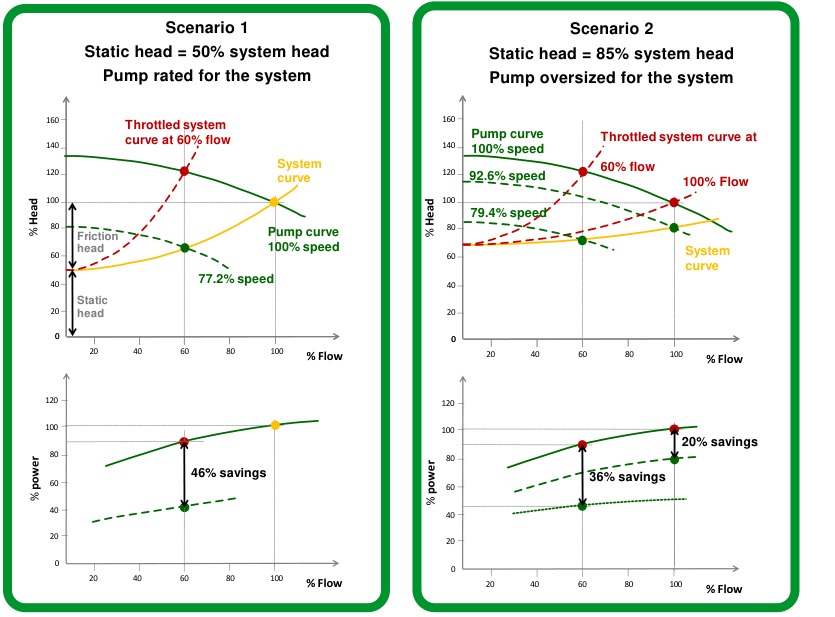
Хаалтаар урсгал тохируулах нь машиныг тоормос дээр гишгэсэн чигээрээ хурдасгахтай адил: урсгал буурна, харин даралт хэрэгцээнээс хамаагүй өндөр үлдэж, эрчим хүч үрэгдэнэ. Давтамж хувиргагч (VFD) харин насосны эргэлтийн хурдыг өөрчилснөөр гидравликийн хуулийн дагуу яг хэрэгцээт цэгт ажиллуулна.
Тооцоолсон хоёр хувилбар:
- Хувилбар 1 — статик өргөлт системийн 50%, насос зөв сонгогдсон: 60% урсгал дээр VFD 46% хэмнэнэ
- Хувилбар 2 — статик өргөлт 85%, насос 20% илүү том: VFD 100% урсгал дээр ч 20%, 60% урсгал дээр 36% хэмнэнэ
Үр ашгийн удирдлагын шилдэг туршлагууд:
- Тогтмол хурдны хөтлөгчийг VFD-ээр солих — хурд, даралт, урсгалыг процессын бодит хэрэгцээнд уялдуулна
- Үйлдвэрлэлийн болон эрчим хүчний өгөгдлийг программын самбараар хянах — хэмжилт ачаалалд ойр байх тусам үнэ цэнэтэй
- Насосны ажлын цэг ба үр ашгийг тогтмол ажиглаж, трендээр сайжруулалтын үр дүнг баталгаажуулах
- Зөв үзүүлэлт ашиглах — санал болгох KPI: хувийн зарцуулалт, кВт·ц/м³
Стандартын хувьд мотор (IEC 60034: IE1→IE3) болон насосны (ЕХ-ны MEI индекс) үр ашгийн шаардлага жил бүр чангарч байгаа тул шинэ төсөлд өндөр ангиллын тоног төхөөрөмж сонгох нь ирээдүйн шаардлагаас урьдчилсан алхам болно.
Алхам 2: Актив хөрөнгийн удирдлага
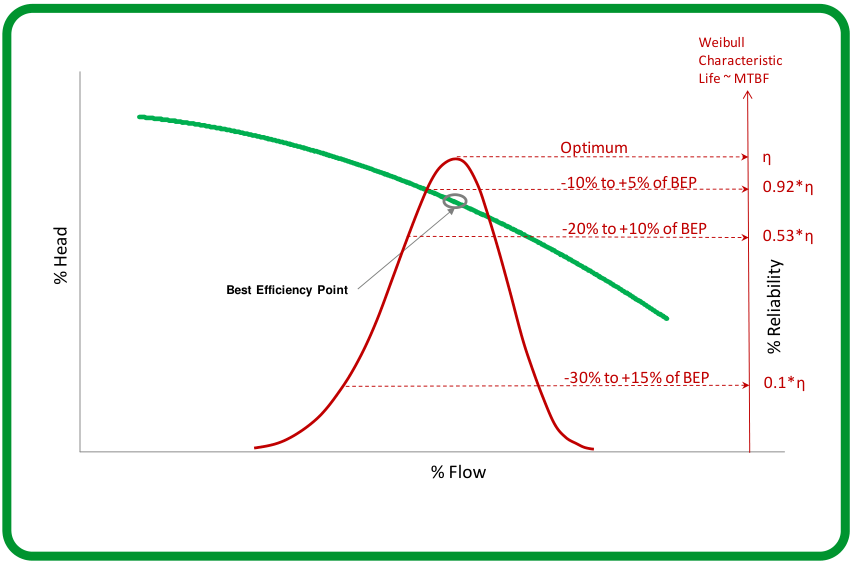
Засвар үйлчилгээ TCO-гийн 25%-ийг эзэлдэг бөгөөд үр ашигтай шууд холбоотой. Насос хамгийн ашигтай цэгээсээ (BEP — Best Efficiency Point) холдох тусам зөвхөн үр ашиг буурахаас гадна элэгдэл огцом нэмэгддэг. Жишээ нь BEP-ийн 60%-д ажиллахад:
- Чигжээсний насжилт 50%, холхивчийн насжилт 20% богиносно
- Их бие, ажлын хүрдний насжилт 25% богиносно
- Засварын зардал ойролцоогоор 2 дахин өснө
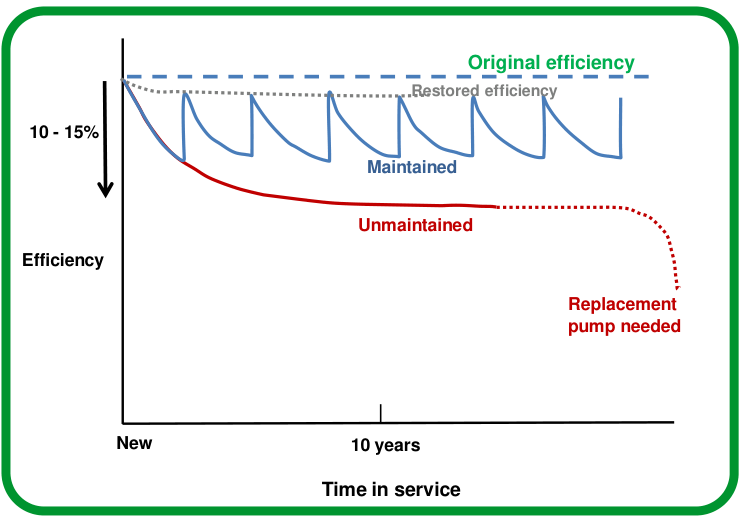
Засваргүй орхисон насосны үр ашиг 10–15% буурдаг бөгөөд гол алдагдал нь ашиглалтын эхний жилүүдэд үүсдэг. Тогтмол засвар үр ашиг, хүчин чадлын алдагдлаас сэргийлнэ.
Засварын гурван арга байдгаас төлөв байдалд суурилсан засвар (condition-based maintenance) хамгийн өртөг хэмнэлттэй нь: сорох ба шахах даралт, хурд, чадал, урсгал, температурыг тасралтгүй хянаж, үр ашгийн трендээс эвдрэлийг урьдчилан илрүүлдэг. Орчин үеийн VFD эдгээр хэмжилтийг өндөр нарийвчлалтай хийж, автоматжуулалтын системд дамжуулахаас гадна насосыг хуурай ажиллагаа, кавитаци, гидравлик цохилтоос (water hammer) хамгаалж, моторыг сүлжээний хэлбэлзлээс тусгаарлана.
Алхам 3: Эрчим хүчний зардлын удирдлага
Цахилгааны нэхэмжлэх олон бүрэлдэхүүнтэй: суурь хураамж, хэрэглээний төлбөр (пик/пикийн бус тариф), демэнд төлбөр (сарын хамгийн өндөр 15 минутын дундаж чадлаар тооцдог — сард ганц удаа гарсан оргил ч төлбөр болдог), чадлын коэффициентын (PF) торгууль. Эдгээрийг ойлгохгүй бол зардал хяналтгүй өсдөг.
Хөрөнгө оруулалт багатай хэмнэлтийн арга хэмжээнүүд:
- Тарифын гэрээгээ судлах — мэргэжлийн дэмжлэгтэйгээр хөрөнгө оруулалтгүйгээр 10% хүртэл хэмнэж болно
- Усан сан, шахалтын горимоо төлөвлөж хэрэглээг пик цагаас шилжүүлэх
- VFD-ээр оргил чадлыг 20% бууруулж демэнд төлбөрийг хэмнэх
- VFD нь мотороос үүдэлтэй PF торгуулийг арилгана
- Алдагдлыг (жишээ нь шугамын гоожилт) даралтын автомат тохируулгаар бууруулах
Дүгнэлт
Үр ашгийн удирдлага, актив хөрөнгийн удирдлага, зардлын удирдлага гэсэн гурван алхмыг хэрэгжүүлснээр насосны системийн нийт өртгийг 20% хүртэл бууруулж болно. Гол технологи нь энгийн — эрчим хүчний менежментийн функц бүхий давтамж хувиргагч, түүнийг хяналтын системтэй холбосон тасралтгүй мониторинг юм.
Enlight Control Systems насос станцын автоматжуулалт, VFD интеграц, SCADA/EMS мониторингийг түлхүүр гардуулах нөхцөлөөр гүйцэтгэдэг — УСУГ-ийн дэд өртөө, уул уурхайн үйлдвэрүүдэд энэ аргачлалыг бодитоор хэрэгжүүлсэн туршлагатай.
Насос станцынхаа хэмнэлтийн боломжийг үнэгүй үнэлүүлэх бол: 7775-4478.
Эх сурвалж: Lionel Gaudrel, Arnaud Savreux — «Three Steps for Reducing Total Cost of Ownership in Pumping Systems», Schneider Electric White Paper (998-2095-02-19-14AR0), © 2014 Schneider Electric.
Танай төсөлд тохирох шийдлийг ярилцъя
Инженер маань үнэгүй урьдчилсан үнэлгээ, төсөв гаргаж өгнө.